Better data from the ground up.
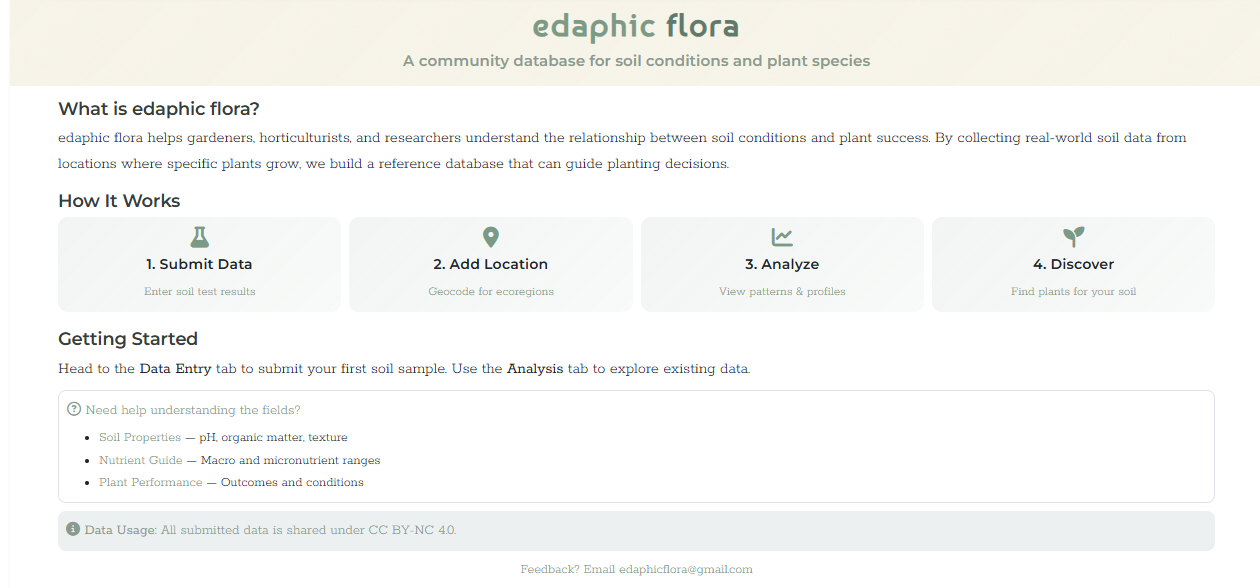
An open-source soil database for gardeners, researchers, and land managers. Record real soil data, uncover what plants actually thrive in, and help build the resource that general references can't.
Most plant references say "well-drained soil" and call it a day. We're building something better — a crowdsourced database of real soil test results from real growing locations. Whether you're restoring a prairie, managing public land, conducting research, or just trying to figure out what to plant in your yard — real data beats guesswork.
edaphic /ɪˈdaf.ɪk/ — relating to the soil, especially as it affects living organisms.
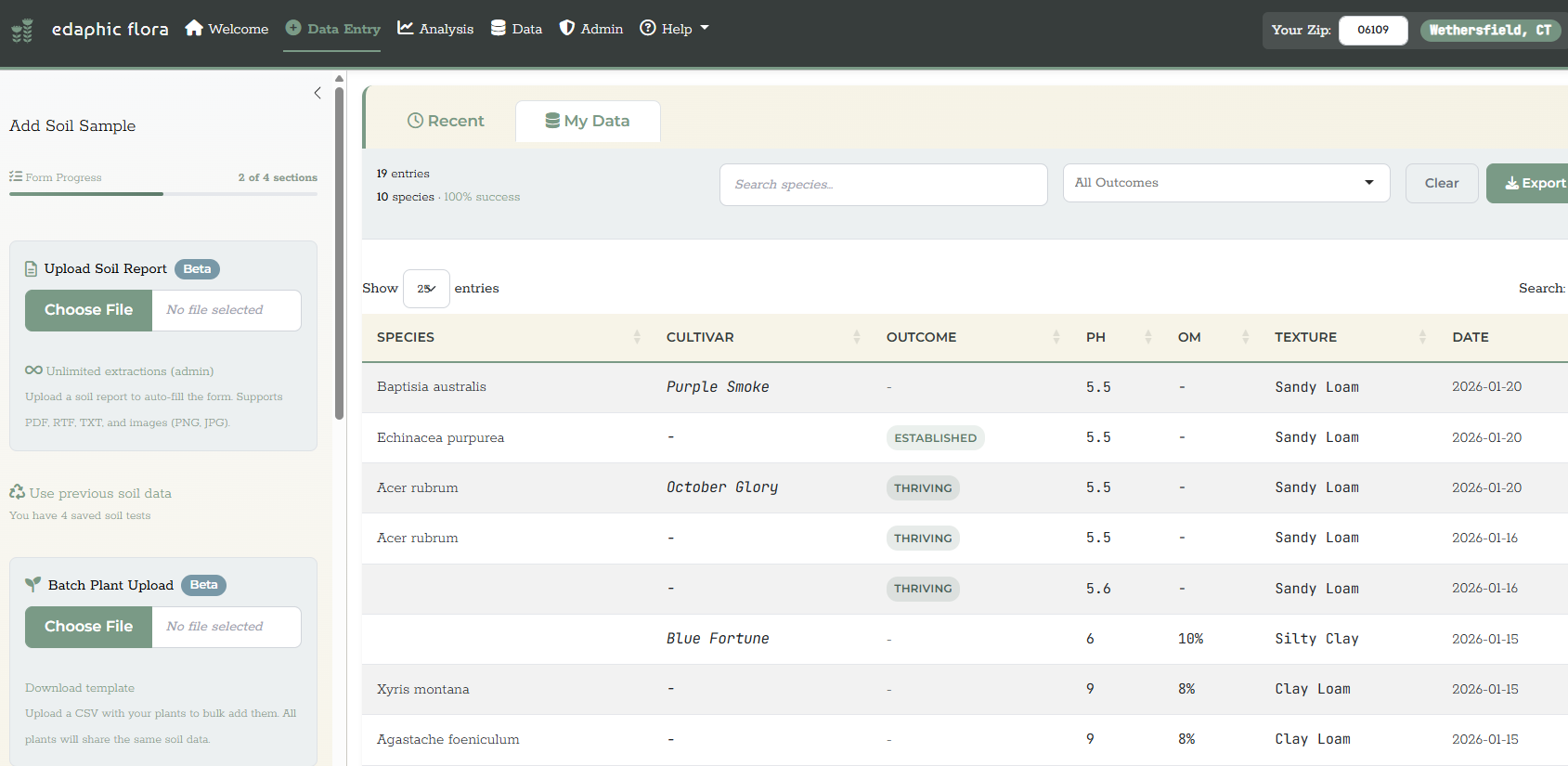
Upload soil lab reports or enter data manually. The app extracts pH, macronutrients, texture, organic matter, and maps every sample to EPA Level IV ecoregions. Over time, the data reveals real-world soil preference profiles that plant tags never will.
Record soil samples for up to 20 species at once. Batch upload with CSV import for existing datasets.
Upload PDF, RTF, or image files from your soil lab. Values are auto-extracted and populated.
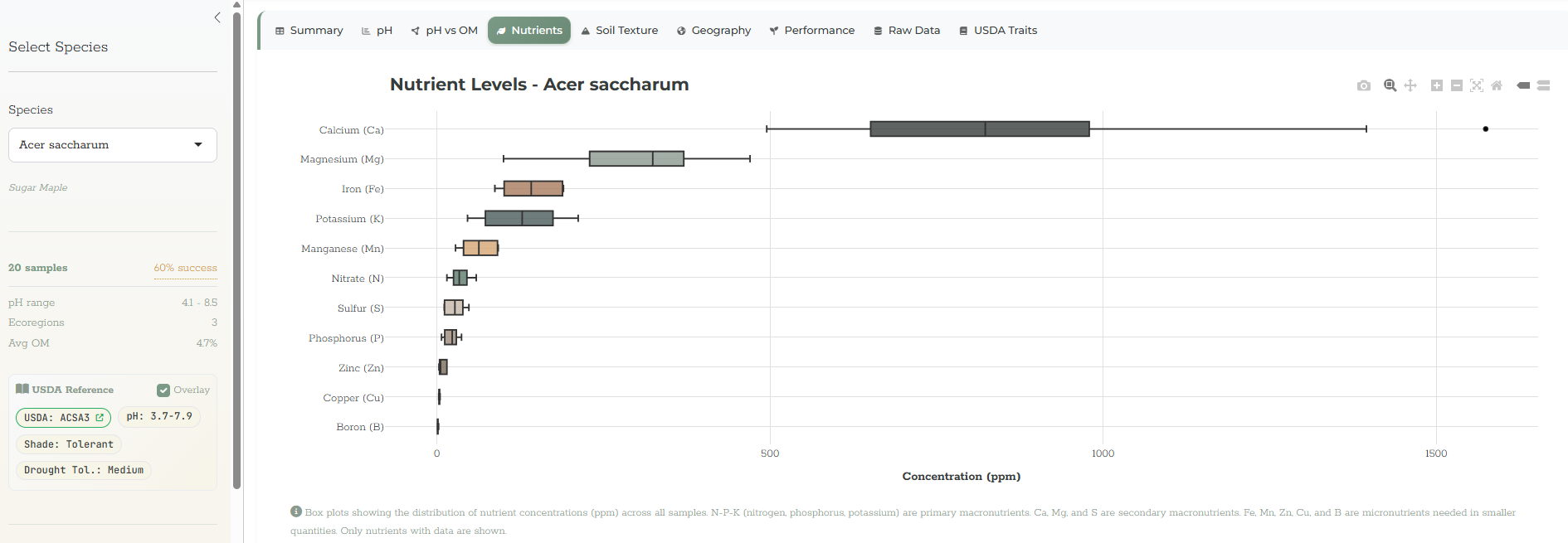
pH distributions, nutrient analysis, soil texture ternary diagrams, correlation heatmaps, and more.
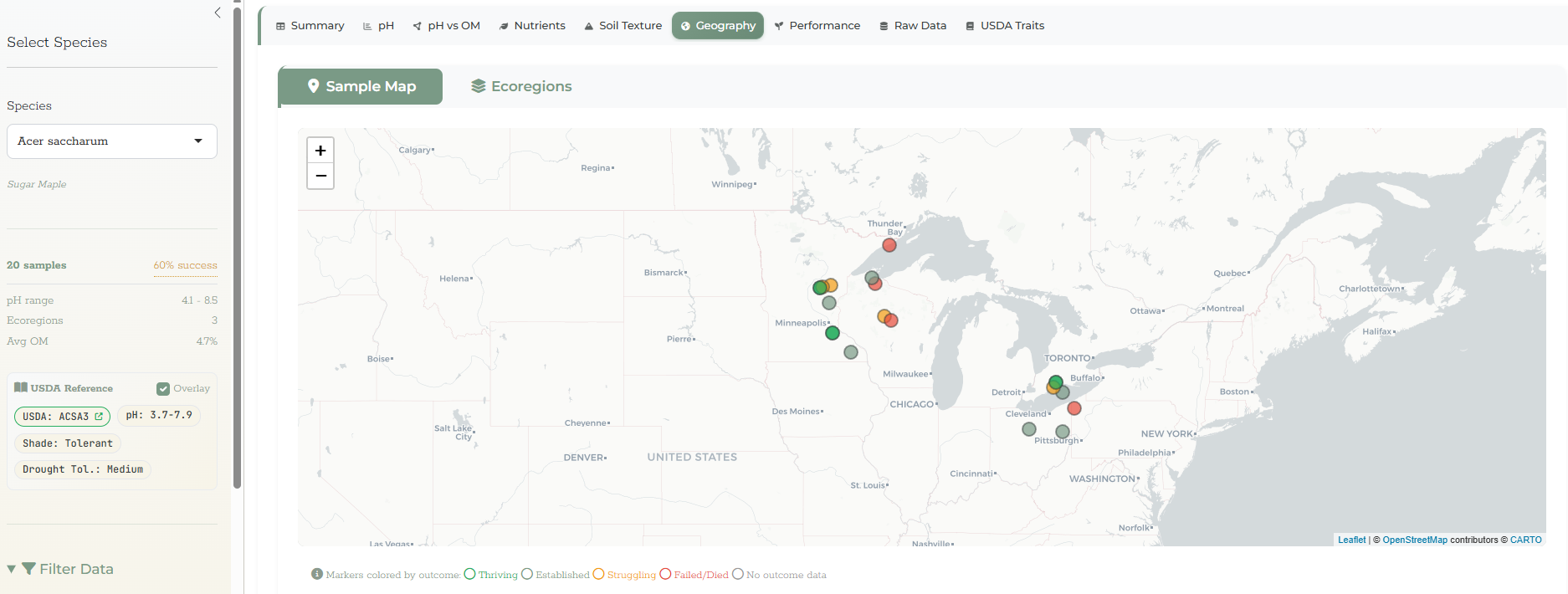
Every sample is geocoded and mapped to EPA Level IV ecoregions with interactive Leaflet maps.
Integrated reference data for soil preferences, wetland indicators, and native/invasive status across all 50 states.
360K+ accepted species from the World Checklist of Vascular Plants ensure taxonomic accuracy.
edaphic flora is free software. The code and data are licensed separately to protect both contributors and the community.
Free to use, modify, and distribute. All derivative works must also be open source.
AGPL-3.0-or-laterFree for non-commercial use with attribution. Contact us for commercial licensing.
CC BY-NC 4.0